
Ga onbeperkt met Magzter GOLD
Krijg onbeperkte toegang tot meer dan 9000 tijdschriften, kranten en Premium-verhalen voor slechts
Poging GOUD - Vrij
More than 140000 virus species identified in the human gut
Scientific India
|March - April 2021
Gut microbiota, gut flora, or microbiome are the microorganisms including bacteria, archaea and fungi that live in the digestive tracts of humans and other animals including insects.
-

The results form the basis of the highly-curated Gut Phage Database (GPD) which will be an invaluable resource for those studying bacteriophages and the role they play on regulating the health of both our gut bacteria and ourselves Viruses are the most numerous biological entities on the planet. Now researchers at the Wellcome Sanger Institute and EMBL's European Bioinformatics Institute (EMBL-EBI) have identified over 140,000 viral species living in the human gut, more than half of which have never been seen before.
The paper, published (18 February 2021) in Cell, contains an analysis of over 28,000 gut microbiome samples collected in different parts of the world. The number and diversity of the viruses the researchers found was surprisingly high, and the data opens up new research avenues for understanding how viruses living in the gut affect human health.
The human gut is an incredibly biodiverse environment. In addition to bacteria, hundreds of thousands of viruses called bacteriophages, which can infect bacteria, also live in the human gut.
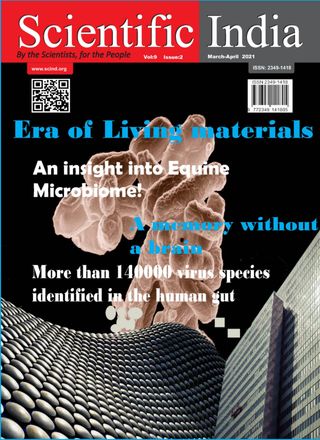

Dit verhaal komt uit de March - April 2021-editie van Scientific India.
Abonneer u op Magzter GOLD voor toegang tot duizenden zorgvuldig samengestelde premiumverhalen en meer dan 9000 tijdschriften en kranten.
Bent u al abonnee? Aanmelden
MEER VERHALEN VAN Scientific India
Scientific India
Japanese physicists were the first to measure the most tolerant entanglement state, the W state
There are many unusual things that happen in the world of quantum physics.

3 mins
September - October 2025

Scientific India
The Fifth Force: Could It Unlock the Secret of Dark Matter?
What if the universe is powered by a force we've never seen before? For centuries, science has explained nature with four fundamental forces.
3 mins
September - October 2025

Scientific India
A flu test you can chew
As flu season nears in the northern hemisphere, scientists are exploring a surprising new way to detect infection: through taste.
1 mins
September - October 2025
Scientific India
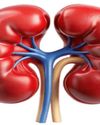
Lab-Grown Kidney Brings Artificial Organ Dream Closer to Reality
In a major leap toward bioengineered organ replacement, scientists have successfully grown human kidney 'assembloids' in the laboratory that mimic key structural and functional features of natural kidneys.
1 min
September - October 2025
Scientific India
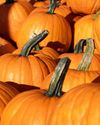
Your pumpkin might be hiding a toxic secret
Pumpkins, squash, zucchini, and other members of the gourd family have a surprising trait: they can take up pollutants from the soil and store them in their edible parts.
1 mins
September - October 2025

Scientific India
2025 Nobel Prize in Physics Reveals Quantum Secrets in Superconducting Circuits
The 2025 Nobel Prize in Physics has been awarded to John Clarke, Michel H. Devoret, and John M. Martinis for their pioneering experiments that brought quantum mechanics from the invisible atomic world to the macroscopic scale a system large enough to hold in your hand.
1 mins
September - October 2025
Scientific India
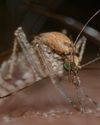
Genomic Evidence Redefines the Evolutionary Age of Mosquitoes
A new genetic analysis has shaken up what we thought we knew about one of humanity's most notorious pests the mosquito.
1 min
September - October 2025

Scientific India
Nobel Prize in Chemistry 2025: Building Molecular Architectures with Room to Breathe
In a scientific breakthrough that bridges molecular design with planetary-scale problems, the 2025 Nobel Prize in Chemistry has been awarded to Susumu Kitagawa, Richard Robson, and Omar Yaghi.
1 mins
September - October 2025

Scientific India
Guardians of Immunity: Nobel Prize 2025 Honors Discoveries that Keep the Immune System in Check
The 2025 Nobel Prize in Physiology or Medicine has been awarded to Mary E. Brunkow, Fred Ramsdell, and Shimon Sakaguchi for their groundbreaking discoveries in the field of peripheral immune tolerance a crucial mechanism that prevents the body's immune system from turning against itself.
1 mins
September - October 2025
Scientific India
'Is cold nuclear fusion feasible?
In early May 1989, two chemists from the University of Utah, Pons and Fleischmann, arrived in Washington, U.S.A. The aim is to present their findings to members of the US Congress.
3 mins
September - October 2025
Translate
Change font size