
Gå ubegrenset med Magzter GOLD
Få ubegrenset tilgang til over 9000 magasiner, aviser og premiumhistorier for bare
Prøve GULL - Gratis
These Mortal Coils
New Zealand Listener
|February 23 - March 1 2019
Our genes can increase our risk of illness, but advances in understanding how they physically interact with each other already offer some better-tailored treatments. Donna Chisholm reports.

At just 24, Tyla Ridsdale calls himself a ticking time bomb. Because of his genes, he’s at substantially higher risk than most of us of developing heart disease, despite working out regularly and eating a healthy diet.
Tests a year ago confirmed Ridsdale has a genetic double whammy. He’s inherited a condition called familial hypercholesterolemia (FH), which causes high cholesterol levels from birth; he also carries a series of other genetic variations that together substantially elevate his risk of a heart attack or coronary disease. FH probably contributed to his grandfather’s death at 37, and also affects his mother and uncle.
The genetic tests put Ridsdale, a software instalment specialist, in the top 1% or less of the population for cardiac risk. The knowledge is potentially life-saving, in that it shows he’s three times more likely to respond to statin treatment than those at low risk, but it’s also, at times, depressing. The drugs he’s on have side effects including a slightly increased risk of diabetes, for example, and he knows that because of his FH and what doctors call his polygenic risk score for heart disease, lifestyle changes alone won’t be enough to alter his prognosis.
Polygenic risk scores are worked out from the total number of genetic variations in the genome that are either associated with, or protect from, disease. These genetic variations can be detected through genome sequencing, or gene chip technology that fragments DNA and can read up to one million variations.
Scientists’ rapidly expanding knowledge of the effect of not only single genetic mutations, but also more subtle variations, known as SNPs, in non-coding DNA – what used to be dubbed “junk” DNA – is about to revolutionise treatment for large numbers of us, and is already leading to faster diagnoses of rarer disorders that might otherwise take months to identify.
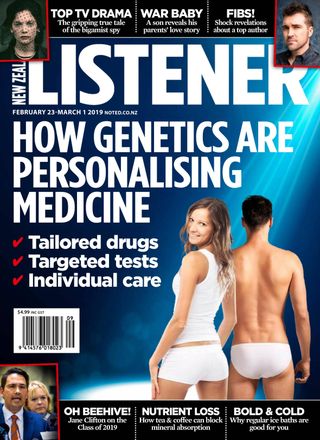

Denne historien er fra February 23 - March 1 2019-utgaven av New Zealand Listener.
Abonner på Magzter GOLD for å få tilgang til tusenvis av kuraterte premiumhistorier og over 9000 magasiner og aviser.
Allerede abonnent? Logg på
FLERE HISTORIER FRA New Zealand Listener

New Zealand Listener
Down to earth diva
One of the great singers of our time, Joyce DiDonato is set to make her New Zealand debut with Berlioz.

8 mins
29 November-December 5 2025

New Zealand Listener
Tamahori in his own words
Opening credits
5 mins
29 November-December 5 2025

New Zealand Listener
Thought bubbles
Why do chewing gum and doodling help us concentrate?
3 mins
29 November-December 5 2025

New Zealand Listener
The Don
Sir Donald McIntyre, 1934-2025
2 mins
29 November-December 5 2025

New Zealand Listener
I'm a firestarter
Late spring is bonfire season out here in the sticks. It is the time of year when we rural types - even we half-baked, lily-livered ones who have washed up from the city - set fire to enormous piles of dead wood, felled trees and sundry vegetation that have been building up since last summer, or perhaps even the summer before.
2 mins
29 November-December 5 2025

New Zealand Listener
Salary sticks
Most discussions around pay equity involve raising women's wages to the equivalent of men's. But there is an alternative.
3 mins
29 November-December 5 2025

New Zealand Listener
THE NOSE KNOWS
A New Zealand innovation is clearing the air for hayfever sufferers and revolutionising the $30 billion global nasal decongestant market.
2 mins
29 November-December 5 2025

New Zealand Listener
View from the hilltop
A classy Hawke's Bay syrah hits all the right notes to command a high price.
2 mins
29 November-December 5 2025

New Zealand Listener
Speak easy
Much is still unknown about the causes of stuttering but researchers are making progress on its genetic origins.
3 mins
29 November-December 5 2025

New Zealand Listener
Recycling the family silver?
As election year looms, National is looking for ways to pay for its inevitable promises.
4 mins
29 November-December 5 2025
Translate
Change font size