
Gå ubegrenset med Magzter GOLD
Få ubegrenset tilgang til over 9000 magasiner, aviser og premiumhistorier for bare
Prøve GULL - Gratis
The Global Fertility Crash
Bloomberg Businessweek
|November 04, 2019
As birthrates fall, countries will be forced to adapt or fall behind.

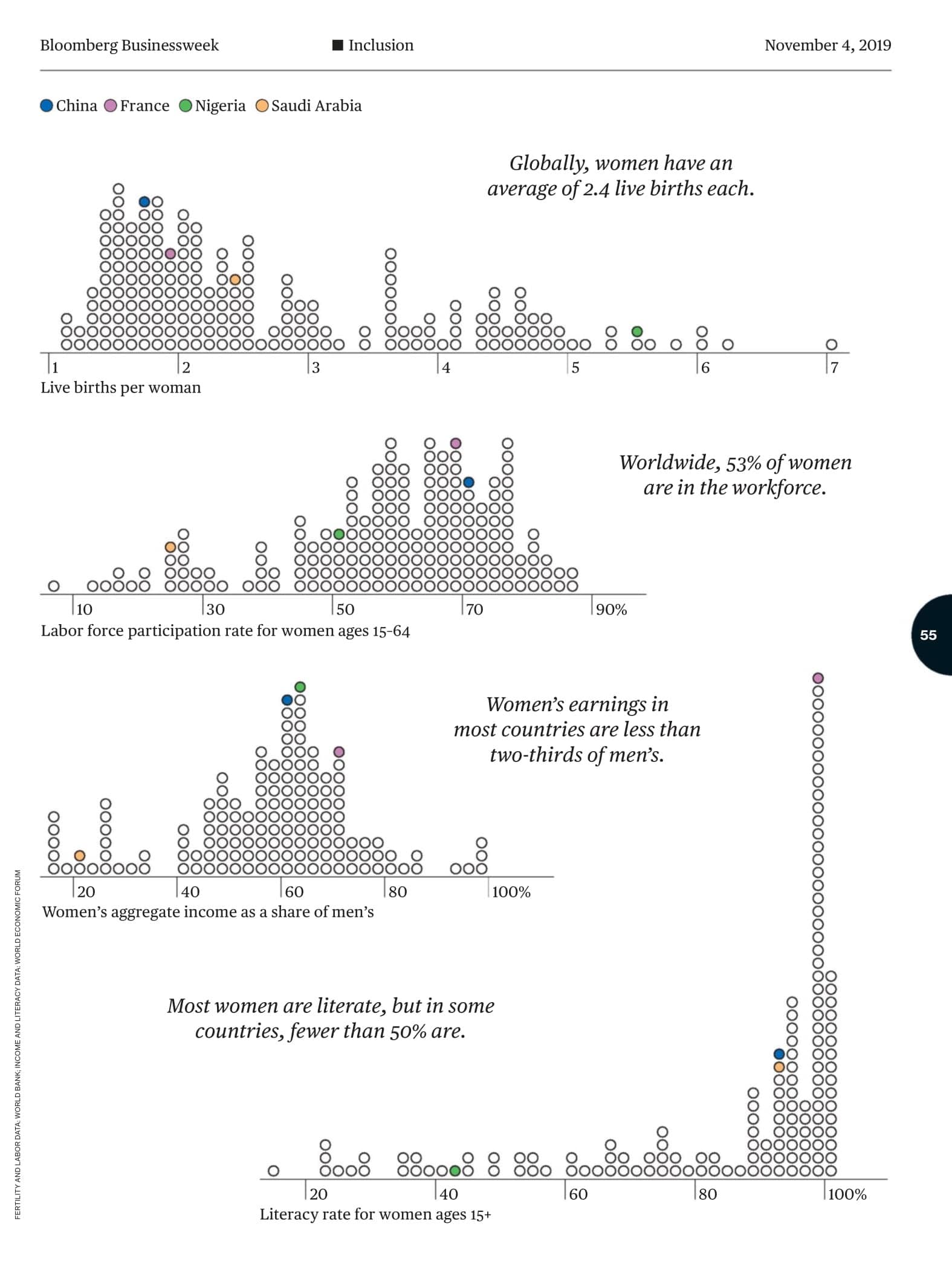
At least two children per woman—that’s what it takes to ensure a stable population from generation to generation. In the 1960s, the fertility rate was five live births per woman; by 2017 it had fallen to 2.43, close to that critical threshold.
Population growth is vital for the world economy. It means more workers to build homes and produce goods, more consumers to buy things and spark innovation, and more citizens to pay taxes and attract trade. While the world is expected to add more than 3 billion people by 2100, according to the United Nations, that’ll likely be the high point. Well before then, falling fertility rates and aging populations will become serious challenges— challenges that will be felt more acutely in some places than others. While the global average fertility rate was still above the rate of replacement— technically, 2.1 children per woman— in 2017, about half of all countries had already dropped below it, compared with 1 in 20 just half a century ago.
Population dynamics needn’t be economic destiny. A study last year by the Organization for Economic Cooperation and Development found that, for most major economies, rising productivity was a more important driver of gross domestic product growth from 2000 to 2017 on average than population growth or change in the employment rate. That may not be sustainable over time, however: For most countries in the OECD study, the relative contribution of productivity to growth has fallen over time. In some countries, too-high fertility may actually be a drag on GDP because of higher costs.

Denne historien er fra November 04, 2019-utgaven av Bloomberg Businessweek.
Abonner på Magzter GOLD for å få tilgang til tusenvis av kuraterte premiumhistorier og over 9000 magasiner og aviser.
Allerede abonnent? Logg på
FLERE HISTORIER FRA Bloomberg Businessweek

Bloomberg Businessweek US
Instagram's Founders Say It's Time for a New Social App
The rise of AI and the fall of Twitter could create opportunities for upstarts

4 mins
March 13, 2023

Bloomberg Businessweek US
Running in Circles
A subscription running shoe program aims to fight footwear waste
3 mins
March 20 - 27, 2023

Bloomberg Businessweek US
What I Learned Working at a Hawaiien Mega-Resort
Nine wild secrets from the staff at Turtle Bay, who have to manage everyone from haughty honeymooners to go-go-dancing golfers.
10 mins
March 20 - 27, 2023

Bloomberg Businessweek US
How Noma Will Blossom In Kyoto
The best restaurant in the world just began its second pop-up in Japan. Here's what's cooking
3 mins
March 20 - 27, 2023

Bloomberg Businessweek US
The Last-Mover Problem
A startup called Sennder is trying to bring an extremely tech-resistant industry into the age of apps
11 mins
March 20 - 27, 2023

Bloomberg Businessweek US
Tick Tock, TikTok
The US thinks the Chinese-owned social media app is a major national security risk. TikTok is running out of ways to avoid a ban
12 mins
March 20 - 27, 2023

Bloomberg Businessweek US
Cleaner Clothing Dye, Made From Bacteria
A UK company produces colors with less water than conventional methods and no toxic chemicals
3 mins
March 20 - 27, 2023

Bloomberg Businessweek US
Pumping Heat in Hamburg
The German port city plans to store hot water underground and bring it up to heat homes in the winter
3 mins
March 20 - 27, 2023

Bloomberg Businessweek US
Sustainability: Calamari's Climate Edge
Squid's ability to flourish in warmer waters makes it fitting for a diet for the changing environment
4 mins
March 20 - 27, 2023

Bloomberg Businessweek US
New Money, New Problems
In Naples, an influx of wealthy is displacing out-of-towners lower-income workers
4 mins
March 20 - 27, 2023
Translate
Change font size