
Magzter GOLDで無制限に
10,000以上の雑誌、新聞、プレミアム記事に無制限にアクセスできます。
試す 金 - 無料
CAN YOU REALLY TARGET BELLY FAT FOR WEIGHT LOSS?
BBC Science Focus
|March 2024
There's a lot of advice about exactly what you should do to shift that spare tyre around your waist. Does any of it add up?

We've all seen the adverts. 'This one, simple trick will blitz the blubber around your belly'; "Turn your body into a furnace and burn off your spare tyre with this diet hack'; 'Get Adonis abs by doing this five-minute workout'. But exactly how sceptical of their claims should we be? What does science actually tell us about getting rid of belly fat?
Well, the first thing to say is that not all fat is bad. To maintain good health, it's critical that our bodies can store excess energy, and they do this using fat. Fat tissue is also structurally important in our bodies - it helps keep us warm through insulation and it cushions the palms of our hands, the soles of our feet and, yes, our bottoms. The fat just under our skin, known as subcutaneous fat and often found on the hips and buttocks, can be healthy. Ultimately, without any fat storage in our bodies, we would be unwell and very uncomfortable.
That said, losing excess belly fat is a good idea. A sizeable gut could indicate a person is carrying a large amount of 'deep' abdominal fat, known as visceral fat, which can surround our organs and make us more likely to be ill. Visceral fat is more insulin-resistant than other fat tissue meaning it's worse at absorbing blood glucose. It's also more linked to inflammation and is more likely to release fats into the blood in response to stress hormones, increasing a person's risk of metabolic disease.
There are various ways to see if your levels of visceral fat are high, but the easiest is to check your waist-hip ratio.
Using a tape measure, measure the widest part of your hips and the narrowest part of your waist, then divide the your waist measurement by your hip measurement. According to the World Health Organization, the healthy ratios for men and women are below 1 and 0.85 respectively (the difference is due to women having broader hips).
READY, AIM...

このストーリーは、BBC Science Focus の March 2024 版からのものです。
Magzter GOLD を購読すると、厳選された何千ものプレミアム記事や、10,000 以上の雑誌や新聞にアクセスできます。
すでに購読者ですか? サインイン
BBC Science Focus からのその他のストーリー

BBC Science Focus
HOW FISH COULD SAVE MILLIONS OF PEOPLE'S SIGHT
There's nowhere near enough donors to meet the demand for corneal transplants. A pioneering treatment that relies on fish scales could change that

3 mins
May 2026

BBC Science Focus
Your Wi-Fi is lying to you
Wi-Fi 7's giant speed claims might look impressive, but the realities of our homes – and the laws of physics – mean that real-world performance will never get close
6 mins
May 2026

BBC Science Focus
WHICH ANIMAL IS MOST LIKELY TO ESCAPE FROM THE ZOO?
Have you heard the one about the monkey and the Yorkshire pudding?
2 mins
May 2026

BBC Science Focus
THE BLACK SERVAL
The black serval (Leptailurus serval) is an unusual, melanistic version of the African serval, a medium-sized wild cat that's native to Africa.
2 mins
May 2026
BBC Science Focus
Cryosleep vs hibernation: What's the difference?
When hibernating animals, such as hedgehogs and dormice, disappear for winter, they don't freeze like the Siberian salamander.
1 mins
May 2026

BBC Science Focus
Space brain
The greatest names in science are often said to be 'big-brained', but this cosmic wonder puts them all to shame. Nebula PMR 1 - otherwise known as the 'Exposed Cranium' nebula for its distinctive shape - measures around 3.2 light-years across.
1 min
May 2026

BBC Science Focus
Your most draining relationships are taking years off your life, study suggests
Difficult people don't just zap your energy - they may also accelerate your biological ageing
4 mins
May 2026

BBC Science Focus
DOES EARTH HAVE A HEARTBEAT?
Move over, Ringo Starr.
1 mins
May 2026
BBC Science Focus
WEIGHT-LOSS DRUGS FOR ALL?
The obesity crisis is ruining lives and costing governments trillions. But some healthcare experts think there's now a radical solution: roll out GLP-1 jabs to everyone who needs them for free. Could it work?
9 mins
May 2026
BBC Science Focus
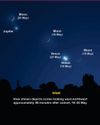
HOW TO SEE VENUS ON APPROACH TO JUPITER
Venus has been slowly moving away from the Sun's glare over the past few weeks, heading into the evening twilight after sunset.
1 mins
May 2026
Listen
Translate
Change font size