
Magzter GOLDで無制限に
10,000以上の雑誌、新聞、プレミアム記事に無制限にアクセスできます。
試す 金 - 無料
Covid-19 Coronavirus Epidemic Has A Natural Origin
Scientific India
|March - April 2020
The novel SARSCoV-2 coronavirus that emerged in the city of Wuhan, China, last year and has since caused a large scale COVID-19 epidemic and spread to more than 70 other countries is the product of natural evolution, according to findings published in the journal Nature Medicine.
-

The analysis of public genome sequence data from SARS-CoV-2 and related viruses found no evidence that the virus was made in a laboratory or otherwise engineered. By comparing the available genome sequence data for known coronavirus strains, scientist determine that SARS-CoV-2 originated through natural processes. Coronaviruses are a large family of viruses that can cause illnesses ranging widely in severity. The first known severe illness caused by a coronavirus emerged with the 2003 Severe Acute Respiratory Syndrome (SARS) epidemic in China. A second outbreak of severe illness began in 2012 in Saudi Arabia with the Middle East Respiratory Syndrome (MERS). On December 31 of last year, Chinese authorities alerted the World Health Organization of an outbreak of a novel strain of coronavirus causing severe illness, which was subsequently named SARS-CoV-2. As of February 20, 2020, nearly 167,500 COVID-19 cases have been documented, although many more mild cases have likely gone undiagnosed. The virus has killed over 6,600 people.
Shortly after the epidemic began, Chinese scientists sequenced the genome of SARS-CoV-2 and made the data available to researchers worldwide. The resulting genomic sequence data has shown that Chinese authorities rapidly detected the epidemic and that the number of COVID-19 cases have been increasing because of human to human transmission after a single introduction into the human population.


このストーリーは、Scientific India の March - April 2020 版からのものです。
Magzter GOLD を購読すると、厳選された何千ものプレミアム記事や、10,000 以上の雑誌や新聞にアクセスできます。
すでに購読者ですか? サインイン
Scientific India からのその他のストーリー
Scientific India
Japanese physicists were the first to measure the most tolerant entanglement state, the W state
There are many unusual things that happen in the world of quantum physics.

3 mins
September - October 2025

Scientific India
The Fifth Force: Could It Unlock the Secret of Dark Matter?
What if the universe is powered by a force we've never seen before? For centuries, science has explained nature with four fundamental forces.
3 mins
September - October 2025

Scientific India
A flu test you can chew
As flu season nears in the northern hemisphere, scientists are exploring a surprising new way to detect infection: through taste.
1 mins
September - October 2025
Scientific India
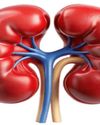
Lab-Grown Kidney Brings Artificial Organ Dream Closer to Reality
In a major leap toward bioengineered organ replacement, scientists have successfully grown human kidney 'assembloids' in the laboratory that mimic key structural and functional features of natural kidneys.
1 min
September - October 2025
Scientific India
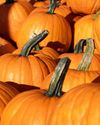
Your pumpkin might be hiding a toxic secret
Pumpkins, squash, zucchini, and other members of the gourd family have a surprising trait: they can take up pollutants from the soil and store them in their edible parts.
1 mins
September - October 2025

Scientific India
2025 Nobel Prize in Physics Reveals Quantum Secrets in Superconducting Circuits
The 2025 Nobel Prize in Physics has been awarded to John Clarke, Michel H. Devoret, and John M. Martinis for their pioneering experiments that brought quantum mechanics from the invisible atomic world to the macroscopic scale a system large enough to hold in your hand.
1 mins
September - October 2025
Scientific India
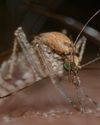
Genomic Evidence Redefines the Evolutionary Age of Mosquitoes
A new genetic analysis has shaken up what we thought we knew about one of humanity's most notorious pests the mosquito.
1 min
September - October 2025

Scientific India
Nobel Prize in Chemistry 2025: Building Molecular Architectures with Room to Breathe
In a scientific breakthrough that bridges molecular design with planetary-scale problems, the 2025 Nobel Prize in Chemistry has been awarded to Susumu Kitagawa, Richard Robson, and Omar Yaghi.
1 mins
September - October 2025

Scientific India
Guardians of Immunity: Nobel Prize 2025 Honors Discoveries that Keep the Immune System in Check
The 2025 Nobel Prize in Physiology or Medicine has been awarded to Mary E. Brunkow, Fred Ramsdell, and Shimon Sakaguchi for their groundbreaking discoveries in the field of peripheral immune tolerance a crucial mechanism that prevents the body's immune system from turning against itself.
1 mins
September - October 2025
Scientific India
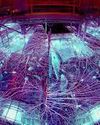
'Is cold nuclear fusion feasible?
In early May 1989, two chemists from the University of Utah, Pons and Fleischmann, arrived in Washington, U.S.A. The aim is to present their findings to members of the US Congress.
3 mins
September - October 2025
Translate
Change font size