
Passez à l'illimité avec Magzter GOLD
Obtenez un accès illimité à plus de 9 000 magazines, journaux et articles Premium pour seulement
DeepSeek's hidden warning for AI safety
Time
|February 24, 2025
THE RELEASE OF DEEPSEEK R1 STUNNED WALL STREET and Silicon Valley in January, spooking investors and impressing tech leaders.
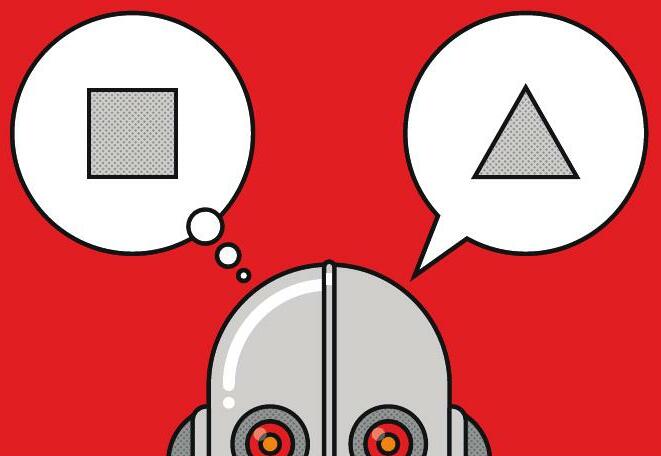
But amid all the talk, many overlooked a critical detail about the way the new Chinese artificial intelligence model functions-a nuance that has researchers worried about humanity's ability to control sophisticated new AI systems.
It's all down to an innovation in how DeepSeek R1 was trained-one that led to surprising behaviors in an early version of the model, which researchers described in the technical documentation accompanying its release.
During testing, researchers noticed that the model would spontaneously switch between English and Chinese while it was solving problems. When they forced it to stick to one language, thus making it easier for users to follow along, they found that the system's ability to solve the same problems would diminish.
That finding rang alarm bells for some AI-safety researchers. Currently, the most capable AI systems "think" in human-legible languages, writing out their reasoning before coming to a conclusion. That has been a boon for safety teams, whose most effective guardrails involve monitoring models' so-called chains of thought for signs of dangerous behaviors. But DeepSeek's results raised the possibility of a decoupling on the horizon: one where new AI capabilities might be gained from freeing models of the constraints of human language altogether.
To be sure, DeepSeek's language switching is not by itself cause for alarm. Instead, what worries researchers is the new innovation that caused it. The DeepSeek paper describes a novel training method whereby the model was rewarded purely for getting correct answers, regardless of how comprehensible its thinking process was to humans. The worry is that this incentive-based approach could eventually lead AI systems to develop completely inscrutable ways of reasoning, maybe even creating their own nonhuman languages, if doing so proves to be more effective.


Cette histoire est tirée de l'édition February 24, 2025 de Time.
Abonnez-vous à Magzter GOLD pour accéder à des milliers d'histoires premium sélectionnées et à plus de 9 000 magazines et journaux.
Déjà abonné ? Se connecter
PLUS D'HISTOIRES DE Time

Time
TRUMP
LAST YEAR'S PERSON OF THE YEAR SPENT 2025 TESTING THE LIMITS OF HIS OFFICE

5 mins
December 29, 2025

Time
BEST OF CULTURE 2023
The art that entertained, moved, and inspired us this year
3 mins
December 29, 2025

Time
NEAL MOHAN
THE YOUTUBE CEO HAS LED THE PLATFORM INTO A NEW ERA OF TV AND VIDEO DOMINATION
16 mins
December 29, 2025

Time
LEONARDO DICAPRIO
MOVIE BY MOVIE, THE ACTOR HAS CRAFTED A HOLLYWOOD CAREER THAT'S BUILT TO LAST— EVEN IN AN INDUSTRY DEFINED BY CHANGE
14 mins
December 29, 2025

Time
A'JA WILSON
HER FOURTH MVP AWARD. HER THIRD WNBA TITLE. IT WAS A VERY GOOD YEAR.
21 mins
December 29, 2025
Time
HOW THE U.S. CAN LEAD
Artificial intelligence is reshaping the world.
2 mins
December 29, 2025
Time
State of the art
AS TIME’S CREATIVE DIRECTOR, I’VE been privileged to work with some of the world’s best artists and photographers in creating thousands of images for our cover.
1 mins
December 29, 2025

Time
The fractured agenda
BY THE TIME NEGOTIATORS FROM AROUND THE WORLD gathered in the Amazonian city of Belém in November to discuss the future of climate action, the world had already experienced an alarming year: near-record global temperatures, unprecedented heat waves across continents, and extreme flooding that scientists say would have been virtually impossible without human-driven warming.
2 mins
December 29, 2025
Time
PERSON OF THE YEAR
SINCE 1801, AMERICAN LEADERS HAVE GATHERED in Washington, D.C., to attend the Inauguration of a new President.
4 mins
December 29, 2025
Time
AI'S NEXT FRONTIER IS HERE
In 1950, when computing was little more than automated arithmetic and simple logic, Alan Turing asked a question that reverberates today: Can machines think? It took remarkable imagination to see what he saw—intelligence might someday be built rather than born.
1 mins
December 29, 2025
Listen
Translate
Change font size