
Vuélvete ilimitado con Magzter GOLD
Obtenga acceso ilimitado a más de 9000 revistas, periódicos e historias Premium por solo
Intentar ORO - Gratis
DRILLING DOWN
The New Yorker
|October 30, 2023
“Killers of the Flower Moon.”

For fans of James Dean, nothing beats the moment in “Giant” (1956) when an oil well erupts. Dean raises his arms and bathes in the rich rain. Clocking in at three hours and twenty-one minutes, “Giant” chimes with Martin Scorsese’s latest movie, “Killers of the Flower Moon,” which, not to be outdone, is five minutes longer still. In an extraordinary sequence, near the start, we see men of the Osage Nation, stripped to the waist, dancing in slow motion, and in unfeigned joy, as a shower of oil falls upon them. It may be the one happy vision in the entire film. From here on, oil will take second place to another precious commodity that gushes with the aid of human know-how. There will be blood.
Written by Scorsese and Eric Roth, “Killers of the Flower Moon” is adapted from the nonfiction book of the same title by David Grann, a staff writer at this magazine. Grann explores the quest for oil under Osage country, in Oklahoma, in the springtime of the twentieth century, and the auctions at which leases for drilling were purchased from Osage landowners. (A single lease could cost more than a million dollars.) In 1920, one reporter, describing the newfound Osage wealth, proclaimed, “Something will have to be done about it.” What was done is soon revealed in the film, as vintage stills of the Osage, posed in their finery or in resplendent automobiles, make way for other images, composed by Scorsese with equal calm: dead bodies of the Osage, viewed from above, laid out on their beds. A voice-over gives their names and their ages, adding, “No investigation.” If they are being murdered, nobody seems to mind.
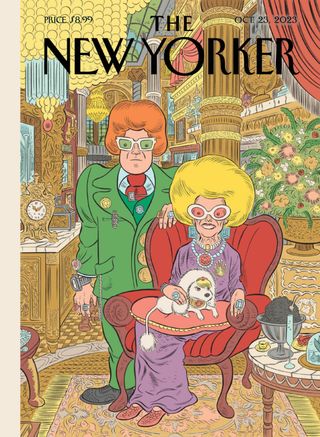

Esta historia es de la edición October 30, 2023 de The New Yorker.
Suscríbete a Magzter GOLD para acceder a miles de historias premium seleccionadas y a más de 9000 revistas y periódicos.
¿Ya eres suscriptor? Iniciar sesión
MÁS HISTORIAS DE The New Yorker
The New Yorker
HOW SHOULD A MOTHER BE?
We keep revising the maternal ideal—and keep falling short of it.

11 mins
January 26, 2026

The New Yorker
THE VERMONTER
What happened when Bernie Sanders left Brooklyn for Burlington.
16 mins
January 26, 2026

The New Yorker
BREAKING NEWS
Inside Bari Weiss's hostile takeover at CBS.
37 mins
January 26, 2026

The New Yorker
SCHOOL OF FISH
On the water with a Southern California seafood savant.
7 mins
January 26, 2026

The New Yorker
COLD COMFORT
The wintry triumphs of Helene Schjerfbeck.
6 mins
January 26, 2026

The New Yorker
WON'T BACK DOWN
The stubborn songs of Zach Bryan.
6 mins
January 26, 2026
The New Yorker
POWER AND PROTEST
On January 8th, the twelfth day of mass protests in Iran, which began when shopkeepers, responding to runaway inflation, closed Tehran’s Grand Bazaar, the Iranian government shut down public access to the internet, further shrouding an already largely closed society. Nevertheless, isolated images and details have been smuggled out, giving a hint of how brutal and monumental these events are.
4 mins
January 26, 2026
The New Yorker
Vinson Cunningham on Barry Blitt's "The Politics of Fear"
I was in a yellow cab in high summer when I saw it. Twenty-three at the time, I sometimes skimmed articles about politics on my clunky BlackBerry while cruising through Central Park to my first real job, fundraising for Barack Obama’s 2008 Presidential campaign. Usually, the ride was placid.
2 mins
January 26, 2026

The New Yorker
SHOW OF FORCE
After a chaotic visit to an ICE jail, a congresswoman faces felony charges in Trump's war against his critics.
37 mins
January 26, 2026
The New Yorker
THE ICE CURTAIN
Nome, Alaska, seems farther from Russia than ever.
26 mins
January 26, 2026
Translate
Change font size