
استمتع بـUnlimited مع Magzter GOLD
احصل على وصول غير محدود إلى أكثر من 9000 مجلة وصحيفة وقصة مميزة مقابل
يحاول ذهب - حر
TRUE WEST
September 25, 2023
|The New Yorker
How Larry McMurtry defined and undermined the idea of Texas.

As a boy, Larry McMurtry rode Polecat, a Shetland pony with a mean streak and a habit of dragging him through mesquite thickets. The family ranch occupied a hard, dry, largely featureless corner of north-central Texas, and was perched on a rise known as Idiot Ridge. McMurtry’s three siblings appeared better adapted to their environment—one of his sisters was named rodeo queen; his brother cowboyed for a while—but Larry, the eldest, was afraid of shrubbery, and of poultry. His father, Jeff Mac, ran hundreds of cows, which he knew individually, by their markings; Larry’s eyesight was so poor that he had a hard time spotting a herd on the horizon. When his cowboy uncles were young, they sat on the roof of a barn and watched the last cattle drives set out on the long trek north. McMurtry lay under the ranch-house roof and listened to the hum of the highway, as eighteen-wheelers headed toward Fort Worth, Dallas, or beyond— anywhere bigger, and far away. Many years later, the London-born Simon & Schuster editor Michael Korda, a rodeo enthusiast, wore a Stetson and a bolo tie to his first meeting with McMurtry. He was surprised, and perhaps a bit disappointed, to find the young writer dressed “like a graduate student,” in slacks and a sports coat. “He did not share my enthusiasm for horses, either,” Korda recalled.
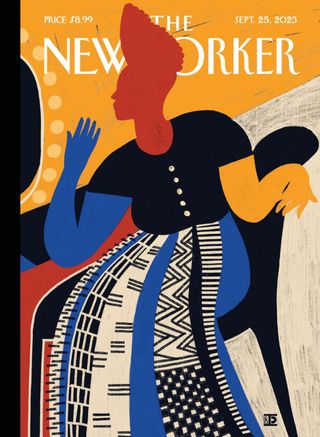

هذه القصة من طبعة September 25, 2023 من The New Yorker.
اشترك في Magzter GOLD للوصول إلى آلاف القصص المتميزة المنسقة، وأكثر من 9000 مجلة وصحيفة.
هل أنت مشترك بالفعل؟ تسجيل الدخول
المزيد من القصص من The New Yorker

The New Yorker
CONTACT SOLUTIONS
“Disclosure Day.”

6 mins
June 22, 2026

The New Yorker
BAD ROMANCE
When did white-collar work start to look so bleak?
14 mins
June 22, 2026
The New Yorker
MUTTER
I'm waiting for my mother at the airport, holding a strip of cardboard above my head that says \"MUTTER.\"
10 mins
June 22, 2026

The New Yorker
BILLIONS AND BILLIONS
The hedge-fund titan Ken Griffin beats the competition at making money—and spending it.
40 mins
June 22, 2026

The New Yorker
MISERY LOVES COMPANY
The rise of \"Admin Nights\" in pursuit of productivity.
13 mins
June 22, 2026
The New Yorker
MEET RUSS FREUD
It used to be called the Roberts Institute for Living, but everybody knew that it was the insane asylum, and that’s what people called it.
3 mins
June 22, 2026

The New Yorker
UP TO NO GOOD
The hell-raising rocker who conquered country radio.
5 mins
June 22, 2026

The New Yorker
SOUL-SEARCHING
How the American church found its followers.
12 mins
June 22, 2026
The New Yorker
FAREWELL, MY LOVELY
Gustavo Dudamel and James Conlon put down their batons in Los Angeles.
9 mins
June 22, 2026
The New Yorker
ALLIES ON ICE
How the secret plans to take over Greenland have ruptured transatlantic relations.
44 mins
June 22, 2026
Translate
Change font size