
استمتع بـUnlimited مع Magzter GOLD
احصل على وصول غير محدود إلى أكثر من 9000 مجلة وصحيفة وقصة مميزة مقابل
يحاول ذهب - حر
EARTH DAY TURNS 50
May 2020
|Reason magazine
HALF A CENTURY LATER, A LOOK BACK AT THE FORECASTERS WHO GOT THE FUTURE WRONG—AND ONE WHO GOT IT RIGHT

ABOUT 20 MILLION Americans turned out for the first Earth Day on April 22, 1970. Lectures and rallies took place at more than 2,000 college campuses, 10,000 elementary and high schools, and thousands of other places across the country. Forty-two states adopted resolutions endorsing Earth Day, and Congress recessed so that legislators could participate in the activities in their districts. It is sometimes described as, up to that time, the largest public demonstration in history.
The lectures and literature surrounding the event featured lots of dismal predictions about the future. One such compendium of doom was The Environmental Handbook, whose cover noted that it had been “prepared for the first national environmental teach-in.” Commissioned by the group Friends of the Earth, the book preached the perils of rising population and imminent depletion of nonrenewable resources. Many of its contributors—let’s call them the Catastrophists—warned that even such drastic actions as halving the number of human beings and stopping economic growth completely might not be enough to prevent the imminent ecological cataclysm.
A different group of researchers believed that while economic growth and technological progress had created some ecological problems, these things also would be a source of solutions. Let’s call these folks the Prometheans. The economist Theodore Schultz argued in the Bulletin of the Atomic Scientists in 1972 that the expansion of modern agriculture would free up more land for nature. Other proponents of this more sanguine outlook included the oceanographer Cy Adler, the economist Christopher Freeman, and Nature editor emeritus John Maddox, author of the 1972 book The Doomsday Syndrome.

هذه القصة من طبعة May 2020 من Reason magazine.
اشترك في Magzter GOLD للوصول إلى آلاف القصص المتميزة المنسقة، وأكثر من 9000 مجلة وصحيفة.
هل أنت مشترك بالفعل؟ تسجيل الدخول
المزيد من القصص من Reason magazine
Reason magazine
A Nostalgic Read for Foreign Policy Elites
IF YOU WERE looking for a human avatar of America's unipolar moment, you couldn't do better than Michael McFaul. Picture a youthful, energetic McFaul with a newly minted Ph.D. bounding into the suddenly post-Soviet space of the early 1990s, full of bright ideas about democracy and faith in the end of history. As McFaul himself puts it, 1991 \"was a glorious moment to be a democratic, liberal, capitalist, multilateralist, and American....I was treated like a rockstar.\"

4 mins
January 2026

Reason magazine
TRUMP IS DEPORTING ENTREPRENEURS
THE TRUMP ADMINISTRATION'S MASS DEPORTATION EFFORT IS ROBBING THE U.S. OF IMMIGRANT BUSINESS OWNERS AND THEIR CONTRIBUTIONS.
9 mins
January 2026
Reason magazine
The First Information Revolution
PRINTING PRESSES AND LIBRARIANS INTERPRETED CENSORSHIP AS DAMAGE AND ROUTED AROUND IT.
11 mins
January 2026

Reason magazine
What Would Bill Buckley Do?
THE NATIONAL REVIEW FOUNDER'S FLEXIBLE APPROACH TO POLITICS DEFINED CONSERVATISM AS WE KNOW IT.
7 mins
January 2026
Reason magazine
MAHA Mandates Food Labels
BURDENSOME FOOD LABELING mandates were once the province of Democrats, who pushed for calorie count requirements on restaurant menus and insisted packaged food must feature warnings about genet- ically modified ingredients and trans fats. Now it's Republicans leading the charge- with equally foolish results.
2 mins
January 2026

Reason magazine
IS JAKE TAPPER DOOMED?
THE CNN ANCHOR ON THE WAR ON TERROR, THREATS TO FREE SPEECH, AND THE FUTURE OF MEDIA
14 mins
January 2026

Reason magazine
REPUBLICAN SOCIALISM
THE TRUMP ADMINISTRATION IS BUYING STAKES IN COMPANIES. THAT NEVER ENDS WELL.
13 mins
January 2026

Reason magazine
A Taste of Capitalism in Warsaw
WARSAW, POLAND, IS a living museum of economic systems. It's a city where concrete reliefs of stoic factory workers decorate a building that now houses a Kentucky Fried Chicken, where a Soviet-era apartment block stands beside a glass tower filled with coworking spaces.
2 mins
January 2026

Reason magazine
Robert Crumb's Roving Art and Life
IN THE SPRING of 1962, an 18-year-old Robert Crumb was beaned in the forehead by a solid glass ashtray. His mother, Bea, had hurled it at his father, Chuck, who ducked. Robert was bloodied and dazed, once again a silent and enraged witness to his family's chaos.”
5 mins
January 2026
Reason magazine
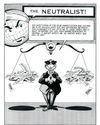
THE HOWARD ROARK OF COMICS
SPIDER-MAN CO-CREATOR STEVE DITKO WAS A GREAT EXAMPLE OF, AND DIRE WARNING TO, OBJECTIVIST POP ARTISTS.
12 mins
January 2026
Translate
Change font size